There are series that can, in principle, list every household in Berenbusch in this time-frame.
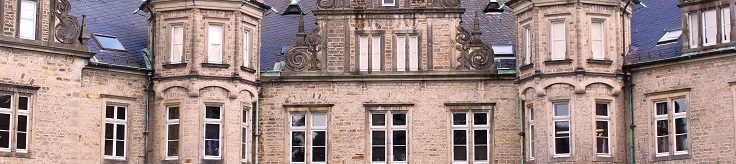
Niedersächsisches Landesarchiv, Abteilung Bückeburg
Below is pratical guidance.
1. What kinds of records you’re looking for
For Schaumburg-Lippe / Amt Bückeburg in the 18th century, the key non-church record types are:
Tax / contribution records
Schatzregister / Kontributionsregister – registers for land and head taxes, often organized by village, then by householder. Names will be in the format “Col. Krückeberg in Berenbusch” etc.
In NLA Bückeburg these fall mainly under F 2 “Kontributionen und Steuern” and the older L 1 / K-Bestände (Samtarchiv / Rentkammer), which include Schatzregister for Schaumburg and Schaumburg-Lippe. (Arcinsys)
My own notes already point to this: you’ve got the reminder to search NLA for Kontribution and Schatzung with Berenbusch/Petzen. (Krueckeberg Docs)
Land and farm registers
Lagerbuch / Lagerbücher – land books listing each farm (Meier, Köter, Brinksitzer), acreage, and dues. For other Ämter in the region there are classic examples like “Verzeichnis der Meier, Köter und Brinksitzer mit Angabe des Ackers…” already catalogued. (Arcinsys)
For Amt Bückeburg you want the equivalents that specifically index Berenbusch; they’re likely in L 1 (Schaumburger Samtarchiv) under 9.3 Amt Bückeburg and in the K-1 Rentkammer Bückeburg series.
Farm charters and estate files
Meierbriefe / Hofbriefe, Hofakten, Altenteilsverträge, Inventare – all the stuff around granting or transferring a farm, setting up retirement for the old colon, division among heirs, etc.
My own “other Schaumburg-Lippe records” page basically gives the shopping list: Meier, Hofbrief, Altenteil, Inventar, Vormundschaft (guardianship) as search terms for Berenbusch/Petzen in K 1 and A 12 (Amt Bückeburg). (Krueckeberg Docs)
These files often name all children and in-laws and can bridge exactly the gap you have between early Kirchenbücher and the 1798–1800 case files you’re already working with.
Militia and service lists
Miliz- / Musterungslisten and Dienstregister (lists of men liable for service, sometimes by house).
For neighboring territories (Ravensberg, etc.) there are 18th-c. militia and service registers; Schaumburg-Lippe had similar structures, so searching A 12 (Amt Bückeburg) with Berenbusch + Miliz or Musterung is worthwhile. (YUMPU)
Fire-insurance (Brandkasse) registers
Early rural Brandkasse records usually list every insurable building and its owner for each village – effectively a house-by-house population list.
My own cheat-sheet already notes Brandkasse – fire insurance registers – householders as a category to search for Berenbusch in the Rentkammer/Amt Bückeburg material. (Krueckeberg Docs)
These tend to be late 18th/early 19th century; they might be just a bit too late for 1728–1750, but could still help infer continuity of a Krückeberg farm backward from the 1790s to the 1720s.
Local administrative case files
You already know the flavor: Rentkammer case files like the garden-enlargement “Cammeral-Kaufbrief” for Colon Krückeberg Nr. 10.
Earlier Untertanen-, Dienste-, Forst-, and boundary cases for Berenbusch may survive in the same K 1 Rentkammer and A 12 Amt Bückeburg series; a “Krückeberg in Berenbusch” in a 1740s boundary dispute is just as genealogically juicy as a baptism.
2. How realistic is 1728–1750 coverage?
True censuses (every person listed with age, etc.) generally don’t exist for tiny principalities like Schaumburg-Lippe that early. Most systematic Einwohnerlisten start closer to 1800.
What does exist, and can get you to named Krückebergs in 1728–1750, are:
land/tax registers keyed by farm/household head, and
individual farm / inheritance / guardianship files when someone dies, remarries, or takes over a holding.
So you’re mainly looking for heads of households called Krückeberg in Berenbusch, and then using:
church records (baptisms, marriages, burials),
age-at-death (e.g. your 1759 burial of Johann Henrich Krückeberg, 55 years, Berenbusch (Krueckeberg Docs)),
plus farm continuity in these administrative records, to argue which anonymous “Krückeberg in Berenbusch” parents belong to which man.
3. Concrete search strategy in Arcinsys / NLA BU
You’ve basically already described this to yourself on your docs site, but here it is distilled for the 1728–1750 Krückeberg problem: (Krueckeberg Docs)
Limit the Bestand first
In Arcinsys, set Bestand = K 1 (Rentkammer Bückeburg)
Run separate searches on the word Berenbusch with each of:
KontributionSchatzungLagerbuchMeierHofbriefAltenteilInventarVormundschaftBrandkasse
Note any items where the Laufzeit overlaps 1700–1750; don’t ignore 1650–1700 or 1750–1780, because they can still anchor the same farm.
Repeat with Bestand = A 12 (Amt Bückeburg)
Same place-keyword (Berenbusch or Berenbusche) plus the subject terms above, plus:
Miliz,Musterung,Dienst
A 12 often has more village-level, boots-on-the-ground material than K 1.
Once you have some promising signatures
Prioritize anything explicitly labeled Lagerbuch, Schatzregister/Kontribution, Verzeichnis der Meier/Köter/Brinksitzer, or Brandkasse for early reconstruction of all households in Berenbusch.
In parallel, pull Hofbrief/Meierbrief, Altenteil, Inventar, Vormundschaft files that clearly involve Berenbusch; those will give you family structures and, with luck, statements like “sein Sohn Jobst, nunmehr Colon der Stätte” that tie your anonymous parents to named men.
Look sideways via the Petzen parish
Because Berenbusch was in Petzen’s parish, some church-administrative and school records for the 18th century may be in other archives (Minden / Westfalen) but still mention Berenbusch heads of household. The 17th-c. Kirchenvisitationen of the Fürstentum Minden show the type of material I mean; later rounds may exist closer to 1700. (LWL.org)
4. How this helps with your specific puzzle
You currently have:
1727 Petzen marriage of the earliest known Krückeberg couple.
Eight Krückeberg baptisms 1728–1750; only two explicitly name a father (one at baptism, one at burial later), the others just say “Krückeberg (in Berenbusch).”
A 1759 burial for Johann Henrich Krückeberg, 55, Berenbusch. (Krueckeberg Docs)
19th-c. Berenbusch Krückebergs documented via later civil/land records and U.S. emigration. (Krueckeberg Docs)
If you can find, say, a Lagerbuch / Kontributionsregister around 1730–1740 that lists only one Krückeberg farm in Berenbusch (or clearly distinguishes “Colon Johann Henrich Krückeberg” vs “Kötner Jobst Krückeberg”), you suddenly have a framework:
tie each anonymous baptism “Krückebergs aus Berenbusch” to the only plausible household at that time, or
show that two Krückeberg households existed concurrently and you must split the set of children accordingly.
Then, Hofbrief/Altenteil/Inventar/Vormundschaft files can (with luck) explicitly connect:
“Johann Henrich Krückeberg, Colon in Berenbusch” “sein Sohn Jobst” “sein Schwiegersohn NN aus Nordholz”
and so on.
5. Bottom line
No tidy censuses for 1728–1750, but yes, there may be:
tax registers,
land/farm registers,
farm-charter and inheritance files,
militia lists,
early fire-insurance lists,
for Berenbusch that name the Krückeberg householders you’re chasing.
The practical route is exactly what you’ve already started sketching:
Work systematically through K 1 (Rentkammer Bückeburg) and A 12 (Amt Bückeburg) using Berenbusch + those subject keywords.
Prioritize anything labeled Schatzung/Kontribution, Lagerbuch, Meier/Hofbrief, Brandkasse for 1700–1780.
Use the resulting household/farm continuity together with your Petzen Kirchenbuch work to assign the anonymous “Krückeberg in Berenbusch” baptisms to specific men.
If you’d like, in a next step I can help you turn one or two of those Arcinsys hits into a very specific ordering request email to NLA BU (e.g., “please send TIFFs of K 1 Nr. XYZ: Berenbusch Lagerbuch, Laufzeit …”).